
Spoiler note: this reflection goes into plot details.
I picked up this book because I thought it would be a good autumn read. I like to switch up genres with the seasons, and When the Wolf Comes Home was unlike any other reading experience. I want to reflect on something that stuck with me from Nat Cassidy's story: the idea that anything you believe can become real.
What's interesting is that under all the suspense, fear, and even the blood, there are real truths. The story mixes made-up tales with ideas about how the mind works, and even a bit of quantum mysticism, all through reimagined fairy tales.
For example, Jess starts to see that the Little Boy she cares for makes his beliefs come true. At this point, she stops trying to explain things with logic and, by the end of the book, whatever her subconscious, which she calls "little Jess," believes starts to show up in real life. So, whatever Jess believes, even deep down, can become real too.
They say children's minds are limitless and pure, but as they get older, their environment, society, and culture begin to shape their minds' limits. I think it's natural; we learn from those around us. By that logic, Cassidy's novel does a great job of portraying both sides of the same coin.
Two Minds, One Coin
The five-year-old boy has been sheltered his entire life, never exposed to anything beyond his father and his mind's manifestations; therefore, he has never encountered an environment, society, or culture, and remains vulnerable yet formidable. Jess is his complete opposite: a struggling 20-something actress living in Los Angeles — an ordinary person in a constant battle within her own mind.
Here's what I'm most excited to reflect on: the human mind is powerful, and I noticed Jess and the Little Boy were shaping each other's minds — his on the conscious side, hers on the subconscious side.
Let me explain: the Little Boy, as any child naturally would, believes anything Jess, the adult, tells him. The limits that normally bind a human mind don't bind him, so his beliefs, true or false, become tangible. Jess influences him by exposing him to new ideas, which he soon makes real.
The Little Boy influences Jess differently. Through him, both Jess and little Jess rediscover an idea both sides of her consciousness had forgotten: that anything is possible, and only you can set your mind's limits. The boy is the exception to that rule — no world has ever shaped him, so he takes what Jess and his father tell him as truth.
The Permission to Fear
Fear is the most constricting emotion. If fear is bound to exist, then the first thing a mind does when it encounters it is decide how to react. Do you run? Face it? Ignore it? Succumb to it? Or overcome it? Regardless of your answer, or mine, the point is that you are the only one who gets to make that decision. I believe Cassidy encourages readers to look inward at the fears, limits, and beliefs lying in the subconscious mind.
As Cassidy writes:
"Fear of rejection. Fear of failure. Fear of not being lovable. Fear of not being enough… Call it what you want; it's all just the skeletal shadow of tree branches on the wall. Fear is fear is fear when it's slithering in the dark."
The mind is fascinating, and theoretically, you actually have to believe you fear something to fear it, right? Whether it's a conscious or subconscious decision, only you can give your mind permission to fear something.
Following that logic, your mind can also choose not to fear, right? As long as you're intentional about it, of course.
Could something like this take time? Yes. Could it be hard? Probably; if it were easy, I think the world would look a little different. Could anyone do this? I think so. If you truly believe in that deep part of your soul that only you can reach, and "pull," as Cassidy likes to say, then yes.
It is so easy to live passively, to forget to protect your mind's power, to let thoughts and feelings pass through you. What's not easy is being intentional about your mind, what it thinks, fears, and believes.
Where the Wolf Comes Home
I take the "wolf" in the title to mean fear and limits, and "home" to mean the mind; in the context of the novel, the wolf only "comes home" when the boy believes it. Throughout the book, people with power and authority chase him across the country, afraid of what he can do. But the truth is, what they feared was a world filled with limitless minds.
Jess's limitless capabilities emerged when she told the Little Boy she was just like him. It was unintentional, but the Little Boy believed her, and believed she had his abilities too. I would wager little Jess believed it too, and the moment little Jess believed it, it became reality.
The real tragedy in this story is that the boy's death at the hands of his father was also due to fear. His father feared it was all his fault; he admitted the boy was only a boy who had never known any better. Still, he feared he had failed as a father and failed the world, himself, and whatever future his son might have had.
By the time this tragedy occurred, half of the trail of disaster left behind the Little Boy came from Jess.
To me, this book reminds me that time will pass, life will happen, and your mind will wander, in its own unique and unfathomable way, with no end and no beginning. It's a reminder to be deliberate with your mind; no other human on earth will ever comprehend your mind the way you can.
I don't know who's reading this, but it absolutely fascinates me that I get to explore a mind that's only mine, that has no end and no beginning, that can guide my subconscious, and that can will whatever it believes to be true.
"Sometimes I even get so scared I accidentally make the thing I'm scared of come true too." - Nat Cassidy
Notes
This is a personal reflection on When the Wolf Comes Home by Nat Cassidy and isn't intended as formal literary criticism.
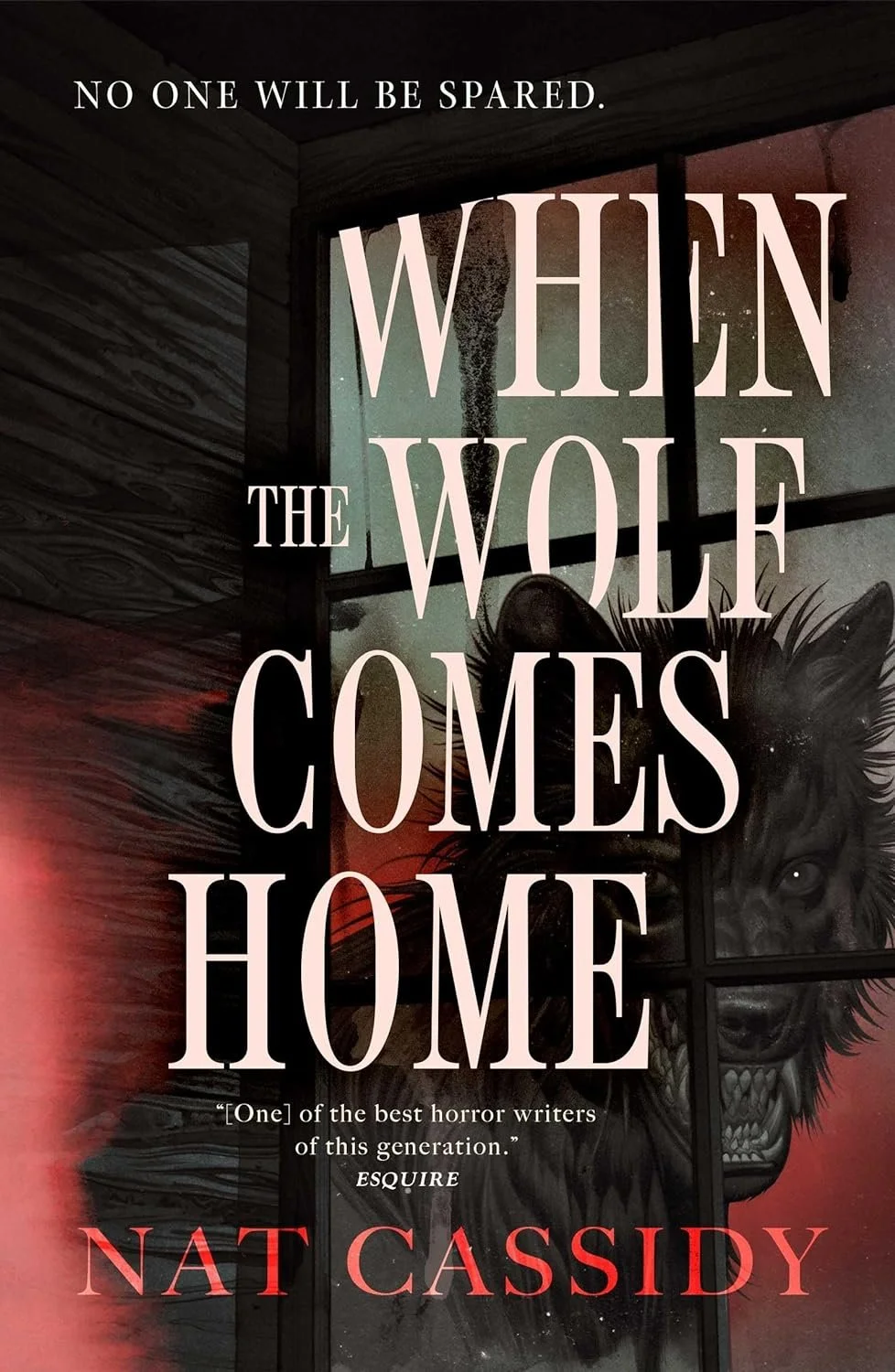
Book cover via Goodreads
